


Zagorochoria (Zagori Villages) in Ioannina
In the heart of Epirus rises Zagori, a mountainous region located northeast of the city of Ioannina. The name Zagori first appeared in a document in 1321 and has Slavic roots, derived from the words “za” (behind) and “gori” (mountain), meaning “the place behind the mountain.”
Zagori is made up of 46 villages, the famous Zagorochoria, spread over an area of 1,053 km², located behind Mount Mitsikeli. Zagori is divided into three geographical regions: eastern, central, and western, each with its own unique history, charm, and villages.
The Zagorochoria are nestled among lush mountains covered with pines and fir trees, at altitudes ranging from 500 to 2,500 meters — the highest peak being Gamila, part of the Tymfi mountain range.
Running through the villages is the Voidomatis River, with its crystal-clear waters — one of the few rivers in Europe with drinkable water. Together with the dense vegetation, dramatic gorges, and traditional stone architecture, it forms one of Greece’s most enchanting landscapes.
A Glimpse into History
Zagori’s history is closely tied to the wider history of the Ioannina region. In 1431, 14 villages of Central Zagori submitted to Sinan Pasha. Later, the eastern and western villages also signed the Treaty of Voiniko, following their resistance.
In 1681, the “Epistasia of Zagori” was founded — an autonomous federation known as Souroutia, which enjoyed significant privileges. During this time, Zagori thrived, with bridges, churches, mansions, public buildings, and roads being built, thanks to donations from Zagoriots living abroad. After the fall of Ali Pasha, the area suffered major blows during the struggle for independence and later under German occupation.
Intellectual and Cultural Legacy
Zagori has produced many benefactors and scholars, such as Anastasios Sakellarios (1799–1865), professor at the University of Athens, Neofytos Doukas (1760–1845), teacher from Ano Pedina, and Ioannis Lambridis (1839–1891), physician, writer, and philosopher from Vitsa.
Traditional Architecture & Villages
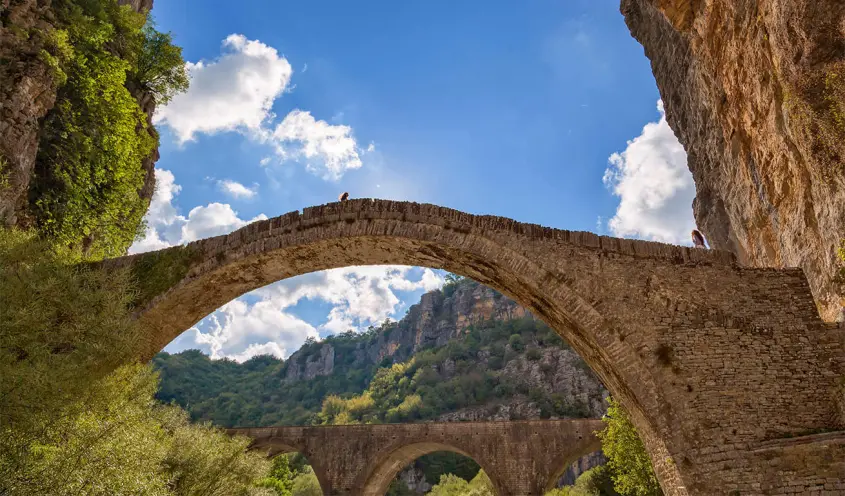
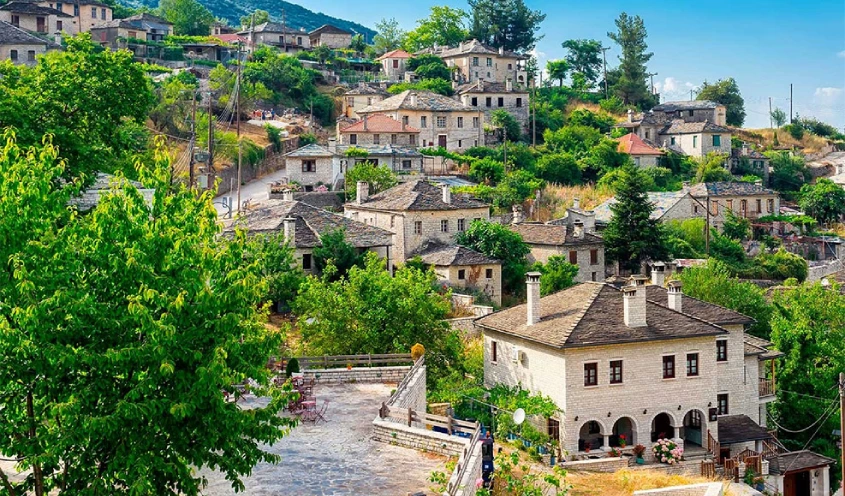
The villages boast stunning traditional architecture, with stone and wooden houses. Many are classified as preserved traditional settlements, featuring impressive stone homes, cobblestone paths, arched bridges — all fine examples of Epirus architecture.
-
Western Zagori, northwest of Ioannina, includes some of the most well-known and picturesque villages, like Aristi, Megalo Papigo, Mikro Papigo, Vikos, Agios Minas, and Mesovouni.
-
Eastern Zagori, northeast of Ioannina, has lesser-known but equally beautiful villages such as Vovousa, Demati, Itea, Kastanona, Petra, and others in the Varda valley (Flambourari, Greveniti, Elatohori, Makrino, Tristeno), Zagoritikos valley (Anthrakitis, Karyes, Doliani, Kavallari), and hamlets like Agia Paraskevi and Potamia.
-
Central Zagori, north of Ioannina, includes villages like Vitsa, Monodendri, Kipi, Asprangeloi, Dilofo, Koukouli, Kapesovo, and the Vlach villages (Vrysochori, Iliochori, Laista), as well as Vradeto, Elati, Elafotopos, Ano Pedina, Kato Pedina, Tsepelovo, Skamneli, Negades, Dikorfo, Manassi, Kalouta, Dipotamo, Fragkades, and Leptokarya.
Nature at Its Finest
The alpine lakes, gorges, rivers, and lush vegetation, combined with the Vikos Gorge, create a landscape of wild, untouched beauty. Despite its tourism development, Zagori has retained its traditional character, untouched by time. Visitors are immersed in the living traditions and history of the region.
Accommodation & Cuisine
There is a wide range of accommodation options including hotels, traditional guesthouses, mansions, and rooms, combining the atmosphere of a bygone era with all modern comforts. In every village, you’ll find tavernas and restaurants serving traditional local dishes, including the famous regional pies. You’ll also be welcomed by the warm hospitality of the locals.
Zagorochoria is an ideal destination year-round, offering an authentic journey into Greek tradition, natural beauty, and cultural richness.